Loading
Luxive Tile & Stone Designs · Orlando
Tub Surround Systems
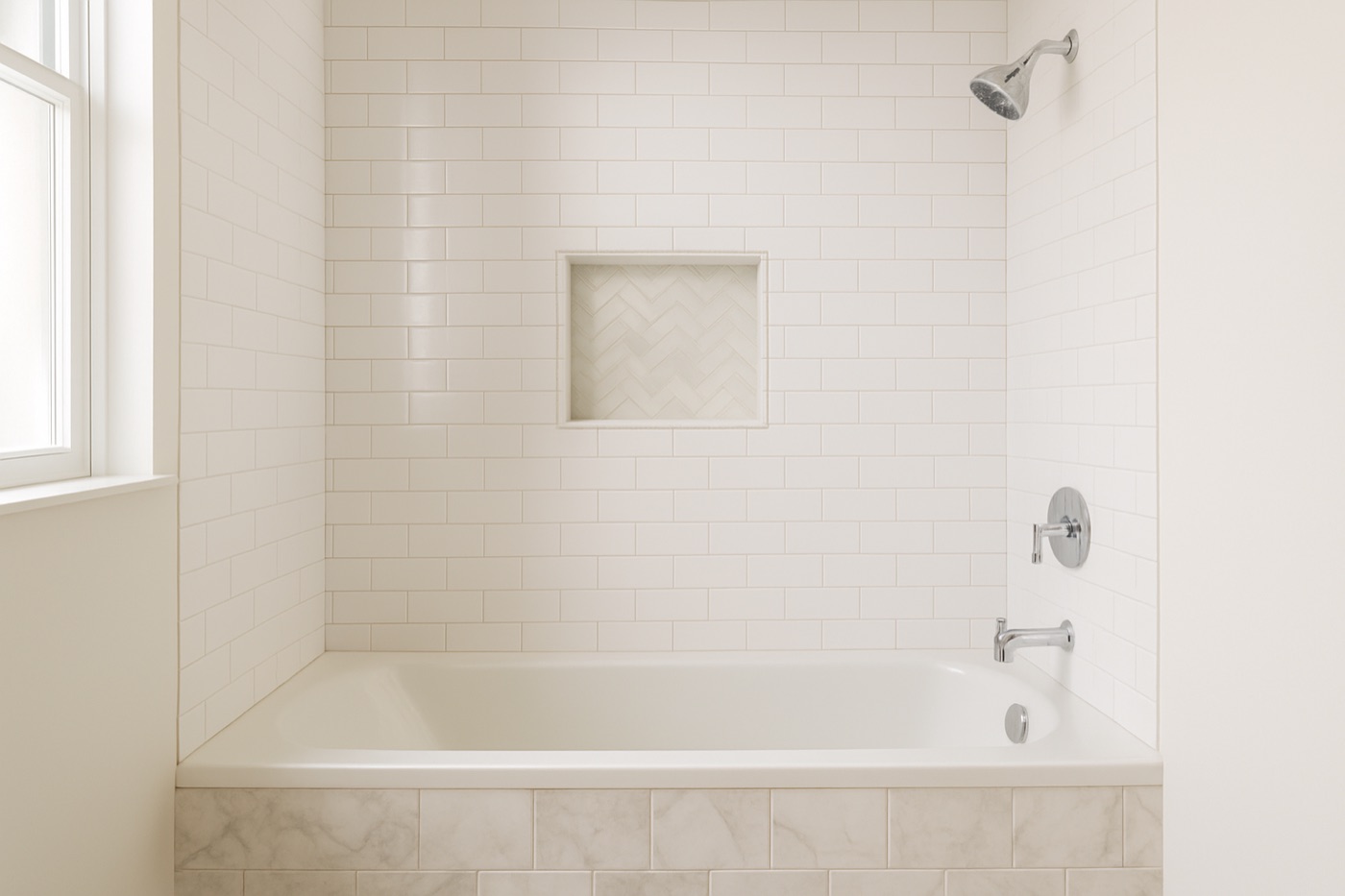
The right way to wrap a tub — substrate, membrane, and finish, engineered together.
A tub surround looks straightforward and almost always isn't. The flange-to-tile transition is the single most-failed detail in residential bathrooms. We build the assembly the way the manufacturer specified — every time.
What it is
A tub surround is still a wet system.
Just because there is a tub catching the water does not mean the walls are out of the wet zone. Splash, vapor, and seasonal humidity all work on the tile field above the tub — and on the substrate behind it.
A Luxive tub surround starts with proper cement board or membrane-faced board, sealed seams, and a detailed transition at the tub flange. Then the tile goes on. Then it stays on.
Why a system matters
The reason tub surrounds fail isn't the tile.
Almost every failed tub surround we tear out failed at one of three places: the flange transition, the corner joint, or the inside-niche waterproofing. Each of those failure modes is preventable when the system is specified correctly up front.
Backer board done right
Cement board or membrane-faced board installed per manufacturer spec — including the gap at the tub flange, the seam tape, and the corner detailing most installs skip.
Sealed transitions
The tub-to-tile joint is detailed with the right sealant in the right movement profile — not silicone-and-pray. Caulk does not waterproof. The assembly behind it does.
Niche integration
Niches are framed, waterproofed, and tiled as integrated assemblies — not cut-in afterthoughts. We use prefab niches where they make sense and built-in-place where they do not.
What's included
Every system is delivered complete.
- Removal of existing tub surround and haul-away
- Tub set or re-set coordination with your trades
- Cement board or membrane-faced backer installation
- Seam tape, corner detailing, and transition sealing
- Waterproof membrane at niche, transitions, and vulnerable seams
- Tile, mortar, and grout per manufacturer specification
- Recessed niche or accent wall (as scoped)
- Mitered, bullnose, or trim edge detailing
FAQ
Common questions.
Can you tile over my existing tub?
Sometimes. If the tub is structurally sound, properly seated, and the flange is intact, we can build a new surround around it. If the tub is rocking, the flange is damaged, or the framing behind the tile is wet, we will recommend setting a new tub before we start.
How tall should the tile go?
For a clean, luxury look in Orlando primary baths we recommend full-height tile — to the ceiling or to a defined trim band. It is structurally smart (no exposed paint-to-tile transition that fails over time) and visually anchors the room.
What does a tub surround typically take?
Most tub surround systems are 4 to 7 working days from demo to final clean. Full-height surrounds with custom niche systems or natural stone may extend a few days. We provide a firm timeline in the proposal.
Ready to spec it?
Configure the system in our online builder for an instant scope and price range — or book a consultation and we’ll walk it on-site.